

AB 98 / SB 415 Truck Routes in Moreno Valley
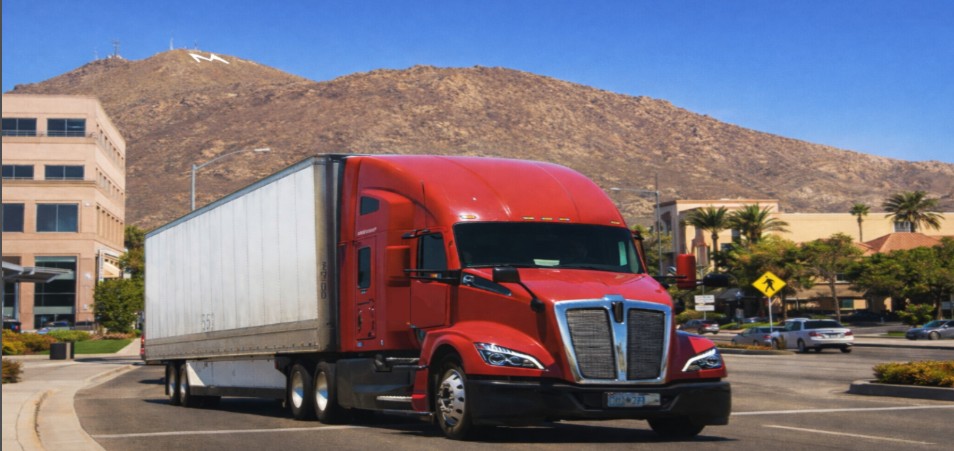
New California Laws protect sensitive receptors and manage truck routes within the City.
California laws Assembly Bill 98 (AB 98) and Senate Bill 415 (SB 415) set new statewide rules for large warehouse and logistics facilities to better protect nearby communities. The laws aim to reduce truck traffic, air pollution, noise, and bright lighting—especially near sensitive receptors such as homes, schools, and parks. Under these laws, large warehouses must follow improved standards for location, design, and truck-routing, include buffers to limit impacts on neighbors, and, in some cases, replace housing if it is displaced by warehouse development. SB 415 clarifies and fine-tunes AB 98 to make the rules easier to apply, helping balance economic growth with community health and quality of life.
Key Requirements
AB 98 (as amended by SB 415) applies to new and expanded logistics use developments where the loading bays are within 900 feet of sensitive receptors, such as homes, schools, daycare centers, parks, and hospitals (as defined in Government Code § 65098(e)). The law requires these facilities to include advanced design and operational measures to reduce community impacts. Specific requirements include:
- Strategic siting on appropriate roads: Developments must be located on arterial roads, major thoroughfares, or local roads that predominantly serve commercial, industrial, or agricultural uses to help keep heavy truck traffic off residential streets.
- Placement and orientation of truck loading bays: Loading bays must be oriented away from sensitive receptors and set back a specified distance (for example, 300–500+ feet depending on project size and zoning) from the property line of the nearest sensitive receptor.
- Separate truck entrance: Facilities must provide a separate entrance for heavy-duty trucks that connects to designated truck routes or appropriately classified thoroughfares.
- Buffering and screening: A planted and structural buffer — including solid decorative walls, landscaped berms, and tree plantings — must be installed between the facility and sensitive receptors to mitigate light, noise, and visual impacts.
- Operational controls: Facilities must develop operational plans (such as truck routing plans) and implement anti-idling measures and other practices to reduce emissions and disturbance near sensitive receptors.
Public Outreach
Please see public outreach events scheduled (Note that meetings are subject to change).
| Meeting | Date & Time | Location |
|---|---|---|
| Neighborhood Outreach | November 25th, 2025 | Moreno Valley Mall (Food Court) |
| Neighborhood Outreach | November 25th, 2025 | City Library (Alessandro Bl. at Kiching St.) |
| Traffic Safety Commission | December 3rd, 2025 | City Hall Council Chamber |
| Stakeholders Meeting | December 11th, 2025 | City Hall Public Works Department |
| Val Verde School District | December 16th, 2025 | Virtual Meeting |
| Traffic Safety Commission | January 7th, 2026 | City Hall Council Chamber |
| Traffic Safety Commission | February 4th, 2026 at 6pm | City Hall Council Chamber |
| Planning Commission (Receive and File presentation only) |
February 12, 2026 at 6 PM | City Hall Council Chamber |
| AB 98/SB 415 Workshop | March 4th, 2026 at 6pm | City Hall Council Chamber |
Public Outreach Meetings: Q & A
| Has the City coordinated truck route removals with neighboring cities, such as Redlands and Perris? |
|---|
| Yes. The City is coordinating with nearby cities and Riverside County to make sure truck routes connect smoothly across city boundaries. |
| Can trucks still travel on streets that are not designated truck routes? |
| Yes, for certain reasons. Federal law allows trucks to use non-truck routes if they are making a delivery or need to reach a specific destination. State law also requires that trucks be able to deviate from assigned truck routes when doing so is necessary to make a delivery. |
| Will the City install new signage for truck routes? |
| Yes. The City will install signs identifying the designated truck routes. Both AB 98 and SB 415 require signs to be installed at all heavy-duty truck exit driveways directing truck drivers to designated truck routes and to the state highway system, which includes Interstate 215 and State Route 60. Both AB 98 AND SB 415 also require the City to post conspicuous signage to identify truck routes, and to make truck routes publicly available in a Geographic Information System (GIS) format, and to share the GIS maps of the truck routes with warehouse operators, fleet operators, and truck drivers. |
| Will truck parking and idling regulations change? |
| The Moreno Valley Municipal Code currently prohibits trucks and other vehicles weighing 10,000 pounds or more from parking: a) on any highway, street, road, alley or private property within any residential district within the City; b) on any vacant lot or unimproved nonresidential property in the City; c) on any nonresidential property so that any part of such vehicle is within 100 feet of any human dwelling; d) within 150 feet of any driveway opening; e) within any commercially zoned property for the purpose other than doing business at the site; f) on any nonresidential property so that any part of such vehicle is within 15 feet of the property line, a public sidewalk, or of a public or private roadway edge; g) on any alley within the City; and h) on any highway, street or road which is adjacent to a parcel upon which there exists a public facility, which includes parks and schools. Moreover, both AB 98 and SB 415, require the City to provide signage for truck parking. In addition, AB 98 and SB 415 require that logistics use developments submit a Truck Routing Plan to the Planning Division for its review and approval, prior to receiving a certificate of occupancy. The Truck Routing Plan must include a queueing analysis for preventing truck parking on public streets. In addition, whenever a new tenant moves into an existing logistic use development, a revised Truck Routing Plan must be submitted to the Planning Division for its review and approval, prior to the issuance of a business license. Upon such review, the Planning Division is authorized to determine if changes to the Truck Routing Plan are necessary, such as adding measures to alleviate any parking issues that may arise during the life of the logistics use development. With respect to idling, the Moreno Valley Municipal Code provides that while adjacent to a developed residential area within the City, trucks and other vehicles weighing 10,000 pounds or more are prohibited from idling for longer than five minutes. However, both AB 98 and SB 415 prohibit idling of heavy-duty truck engines for more than 3 minutes at a logistics use development and require that signs regarding the 3-minute restriction be posted at logistics use developments along entrances to the site and at the truck loading bays. Signs are also required to be posted identifying any appropriate idling facility locations – if any. AB 98 and SB 415 also prohibit idling while powering climate control equipment if the truck is capable of plugging in at a loading bay. In light of the foregoing, staff may be recommending that the five-minute idling restriction set forth in the Municipal Code be revised to 3 minutes to be consistent with AB 98 and SB 415’s on-site idling restrictions. |
| What changes are proposed to the truck route map, and how do they reduce impacts near homes, schools, or parks? |
| The proposed changes to the City’s current truck routes are depicted on the interactive map located at: moval.org/truck routes. The proposed changes were guided by the provisions of AB 98 and SB 415, as described below. AB 98 and SB 415 mandate that City update the Circulation Element of the City’s General Plan to: a) Identify and establish specific travel routes for the transport of goods, materials, or freight for storage, transfer, or redistribution to safely accommodate additional truck traffic and avoid residential areas and sensitive receptors; and b) Maximize the use of interstate or state divided highways as preferred routes for truck routes. AB 98 and SB 415 further provide that major or minor collector streets and local roads that predominantly serve commercial or industrial uses shall be used for truck routes only when strictly necessary to reach existing industrial zones and that trucks be routed via transportation arteries that minimize exposure to sensitive receptors. “Sensitive receptors” include the following: a) residence, including, but not limited to, a private home, apartment, condominium unit, group home, dormitory unit, or retirement home; b) a school, including, but not limited to, a preschool, prekindergarten, or school maintaining kindergarten or any of grades 1 to 12, inclusive; c) daycare facility, including, but not limited to, in-home daycare; d) publicly owned parks, playgrounds, and recreational areas or facilities primarily used by children; e) nursing homes, long-term care facilities, hospices, convalescent facilities, or similar live-in housing; and f) hospitals. |
| How is the City of Moreno Valley balancing truck access with protecting neighborhoods and other sensitive areas? |
| The City reviews truck traffic volumes, nearby land uses, and road design to ensure trucks can reach destinations while minimizing impacts on sensitive receptors, such as homes, schools, parks, medical facilities, etc. This approach is guided by AB 98 and SB 415, which require cities to minimize truck exposure to sensitive receptors while still maintaining efficient goods movement. |
| How will the City of Moreno Valley notify Caltrans, trucking companies, and GPS providers about truck route changes? |
| The City will communicate the approved truck routes with relevant agencies and stakeholders so navigation systems and trucking operations can update their routing information. AB 98 and SB 415 both require the City to make truck route maps publicly available in GIS format and to share those maps with warehouse operators, fleet operators, and truck drivers. |
| What signage will be removed or installed, and where will it be placed? |
| Signs will be removed from streets that are no longer truck routes. New directional or “No Truck” signs will be installed where needed to guide drivers. The Moreno Valley Municipal Code requires that the City label truck routes with conspicuous signs erected at all entrances to truck routes. Further, the Municipal Code also requires the City to erect conspicuous signs at entrances of streets where trucks are prohibited. This signage work is required by AB 98 and SB 415, which direct cities to clearly identify truck routes and install directional signage to guide trucks to approved routes. |
| How will SB 415 truck idling rules be implemented and enforced? |
| SB 415, building on AB 98, requires a threeminute idling limit at logistics use developments and specifies that signage must be posted at entrances and loading bays, with enforcement handled consistent with local authority. The City will handle signage in the public right-of-way, while private property signage is the responsibility of the property owner. Violations of the three-minute idling limit would subject the violator to a misdemeanor citation. |
| What is the enforcement plan for truck route, parking, and idling violations? |
| The Moreno Valley Police Department and the City’s Code Compliance Officers will enforce violations based on the type of violation and where the violation occurs. SB 415 requires the City to have at least one CHPtrained enforcement officer for purposes of truck route enforcement. The City currently has two CHP-trained officers. The City has not yet determined how many deputies will be needed for enforcement of the City’s truck routes ordinance, which is a decision that the City may consider at any time in the future if more officers become necessary. |
| When will new truck route signs be installed? |
| Signs will be installed or removed after the proposed truck route map is officially approved. AB 98 and SB 415 require signage to be installed once truck routes are formally adopted and incorporated into the City’s circulation planning. |
Proposed AB 98/SB 415 Truck Route Map
Explore our interactive GIS map to view existing truck routes and potential changes (New Truck Routes) in Moreno Valley or download our printable static map (pdf).
Frequently Asked Questions
-
What is AB 98?
AB 98 is a law that sets new environmental and design standards for logistics use facilities near sensitive receptors to mitigate impacts such as traffic, air pollution, and noise. Please refer to State Government Code Section 65098 for more information. -
What is a sensitive receptor?
A sensitive receptor may include residences, schools, daycare facilities, parks, playgrounds, nursing homes, and hospitals. Specific definitions outlined under State Government Code Section 65098(e). -
What is the warehouse concentrated region?
The warehouse concentration region includes the counties of Riverside and San Bernardino, and the cities of Chino, Colton, Fontana, Jurupa Valley, Moreno Valley, Ontario, Perris, Rancho Cucamonga, Redlands, Rialto, Riverside, and San Bernardino.
The deadline for truck route adoption in the warehouse concentration region is January 1, 2026. Jurisdictions outside the warehouse concentration region have until January 1, 2028 to adopt truck routes. -
What is a truck route?
Truck routes dictate where large trucks are allowed to drive -
What does the City have to do for truck routes?
The City of Moreno Valley must do the following:
- The Transportation and Mobility Element must be updated to include designated truck routes that avoid sensitive receptors.
- Maximize the use of highways as preferred routes for truck routes. Truck Routes may also include arterial roads, major thoroughfares, and predominantly commercially oriented (50 percent of the properties fronting the road within 1,000 feet are designed for commercial or industrial use) local streets as needed.
- Engage with the community to hear concerns and gather input.
- Post signage identifying truck routes, truck parking, and truck idling.
- Provide a GIS map of designated truck routes to the public.
-
Will this change where trucks park and stop?
AB 98 requires jurisdictions to place conspicuous signage identifying truck routes and addressing both parking and idling
-
How do truck routes affect the community?
AB 98 defines designated routes trucks must use which may change some truck traffic patterns within the city. Truck routes are designed to keep trucks on main roads and away from sensitive receptors as much as possible.
-
How were the routes chosen?
City staff, transportation experts, and community members work together to identify truck routes that reduce impacts on sensitive receptors such as homes, schools, and parks. Experts review current truck traffic, consider route criteria, and include public input. All proposed truck routes must meet the following requirements:
- Truck routes should prioritize freeways and highways whenever possible.
- Major or minor collector streets and roads that mainly serve commercial areas should be used for truck traffic only when necessary.
- Trucks should be routed in ways that minimize exposure to sensitive receptors, such as homes, schools, and parks.
-
What is the mandatory use for truck routes?
General Rule: Most cities and counties require commercial trucks to stay on posted "Truck Routes" except when making a direct delivery to a location not situated on one of those routes.
California Vehicle Code (CVC) Section 35703: This section provides the specific "Delivery Exception". It explicitly states that no local ordinance (under Section 35701) can prohibit commercial vehicles from using restricted streets if they are traveling via a direct route to make pickups or deliveries of goods to a building on that restricted street.
Comments or Questions?
For questions or comments about AB98/SB 415 Truck Routes:
Contact the Public Works Transportation Engineering Division:
951.413.3140
transportation@moval.org
For questions about AB 98/SB 415 Development Standards:
Contact the CDD, Planning Division:
951.413.3206
planningemail@moval.org